

It often starts at about 9 am.
You have had your morning coffee, your inbox is already filling up, and instead of feeling clear and capable, you feel a little too switched on. Your heart is slightly faster. Your thoughts are moving quickly. Focus feels harder, not easier. If that sounds familiar, you are not alone. Many working people across the UK are looking for how to reduce cortisol naturally while still keeping the mental energy they need.
A big part of the answer is not quitting caffeine altogether. It is choosing a more cortisol friendly caffeine source and building a steadier ritual around it. For many people, ceremonial matcha offers exactly that: alertness without the harsh lift-and-drop pattern that coffee can bring.
Why morning coffee can trigger 9 AM anxiety
Your body already produces cortisol in the morning as part of its natural wake-up rhythm. That is not a bad thing. Cortisol helps you get moving, feel awake, and prepare for the day. The problem can come when a strong coffee lands on top of that morning rise.
Caffeine has been shown to increase cortisol and stress reactivity in humans. That does not mean coffee is harmful for everyone, and it does not mean cortisol is something to fear. It does mean that if you are already stress-sensitive, anxiety-prone, or simply tired and under pressure, a large early coffee can feel like too much, too soon.
This is often why people say coffee makes them “productive” for 20 minutes and then “wired” for two hours.
Common signs of this pattern can include:
- Racing thoughts
- Shaky concentration
- Tight chest feeling
- Sudden irritability
- The urge for another coffee by late morning
If you have been searching for a coffee alternative for anxiety, that feeling matters. Your routine may not need more force. It may need more balance.
How to reduce cortisol naturally without losing focus
If you want to know how to reduce cortisol in a practical way, start with the basics: sleep, food, daylight, movement, and a calmer morning pace. Yet your caffeine source also matters more than many people realise.
A gentler morning drink can support a more stable start to the day, especially if you work at a desk, spend hours in meetings, or need deep concentration rather than bursts of intensity. That is where matcha stands out. It still contains caffeine, so it is not caffeine-free. But it brings caffeine in a different package.
Matcha is made from the whole tea leaf, finely stone-ground into powder. When you drink it, you consume the leaf itself, not just an infusion. That means you get naturally occurring compounds from the tea plant together, including caffeine and L-theanine.
That pairing is what makes matcha a more cortisol friendly caffeine option for many people.
L-theanine benefits in matcha for calm focus
The most talked-about of the naturally occurring compounds in matcha is L-theanine. This amino acid is found in tea and is closely linked with the calm, attentive feeling that tea drinkers often describe.
Research suggests L-theanine benefits may include support for relaxed alertness, reduced feelings of acute stress, and better attention when combined with caffeine. Caffeine on its own can feel sharp and overstimulating. L-theanine changes that experience. Rather than cancelling caffeine out, it appears to soften the rougher edges.
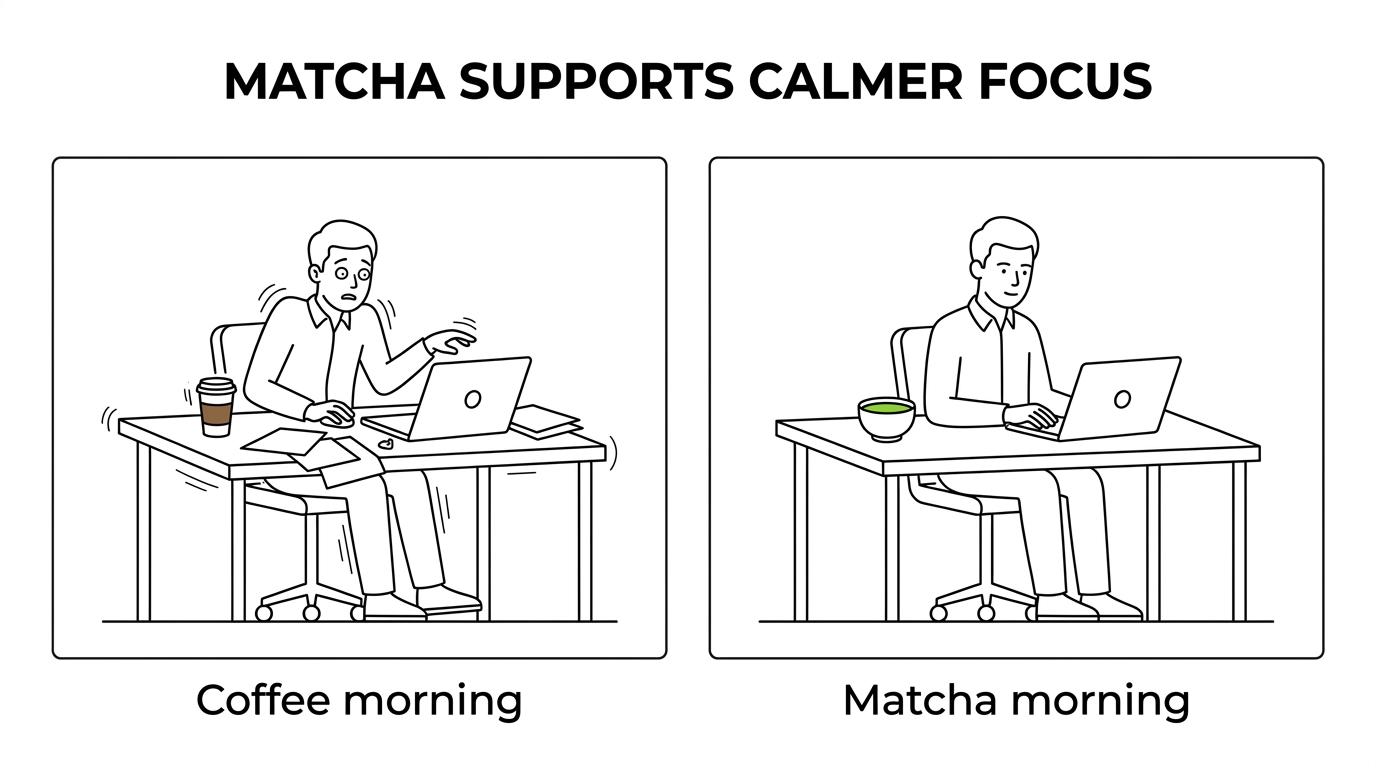
That is why matcha is often described as focused rather than frantic.
It is worth being precise here. Direct head-to-head clinical trials comparing ceremonial matcha and coffee on cortisol are still limited. Still, there is strong evidence that caffeine can raise cortisol, and good evidence that L-theanine supports calm attention and may reduce stress markers in certain settings. Put together, that makes matcha a very sensible option for people who want energy with less jitter.
For people managing anxiety, and for some neurodivergent adults including those with ADHD, that difference in feel can be significant. Not as a treatment, and not as a promise, but as a more supportive daily ritual.
Why ceremonial matcha is a better coffee alternative for anxiety
Not all matcha is the same. If your goal is calm focus, quality matters.
Ceremonial-grade matcha is usually chosen for a smoother taste, finer texture, and a more balanced everyday drinking experience. I AM BODHI keeps that simple and pure: 100% matcha green tea powder, no additives, no flavourings, no functional extras. Just single-origin matcha from one family-run farm in Maoshan, Jiangsu, China, grown in shade and stone-ground in the traditional way.
That matters because the product does not need to be dressed up as something else. It is still tea. It is still caffeine. It is simply a more measured form of stimulation, built for calm focus.
When people switch from coffee, they often notice a few practical differences:
- The energy curve: steadier and less abrupt
- The mental feel: alert, but often less jangly
- The ritual: slower, quieter, easier to enjoy
- The formula: 100% pure matcha with nothing added
A good coffee alternative for anxiety should not leave you feeling deprived. It should leave you feeling more like yourself.
Coffee vs ceremonial matcha for cortisol-friendly caffeine
A large café coffee can be a lot to throw at your nervous system first thing. Matcha tends to feel different not because the caffeine is magically different, but because the dose is often gentler and it comes with L-theanine and tea polyphenols in the same plant matrix.
Here is a simple comparison for a daily morning habit:
|
Daily habit |
Typical feel |
Additives |
Approximate cost per serving |
30-day cost |
|---|---|---|---|---|
|
Café coffee |
Fast lift, more likely to feel jittery for sensitive people |
Often milk, syrups, sugar |
£3.50 |
£105 |
|
I AM BODHI ceremonial matcha |
Steadier energy, calm focus for many people |
None in the matcha itself |
£0.60 |
£18 |
That difference adds up quickly. Switching one daily café coffee to matcha could save around £87 over 30 days.
Cost is only part of the picture, of course. The bigger gain is often how the morning feels. Less peaky. Less reactive. More settled.
A calmer ritual can change the whole working day
Many people try to solve stress with another supplement, another productivity app, or another afternoon coffee. Often the better move is simpler: change the first cup.
When your morning drink supports steadier attention, the rest of the day can feel easier to hold. Meetings become less draining. Deep work lasts longer. You are less likely to chase energy at 11 am and pay for it at 3 pm.
This is one reason matcha has become popular with professionals who want focus without the rollercoaster, and with people who want a routine that feels calm rather than aggressive.
A simple morning ritual can help:
- Sift or spoon your matcha into a cup
- Add a splash of water and whisk
- Top with hot water or milk
- Drink before work or between tasks
Even that one quiet minute can make the start of the day feel more deliberate.
How to make matcha work for your morning
If you are moving away from coffee, keep the switch easy. You do not need a perfect tea ceremony. You need a realistic habit you will repeat.
Start with one serving in the morning and give it time. Your body may need a week or two to adjust if you are used to stronger coffee. Many people find that the appeal of matcha grows once they stop comparing it to the punch of espresso and begin to value its steadier rhythm.
A few helpful points can make the transition smoother:
- Drink it consistently: a ritual works best when it is repeated
- Pair it with breakfast: caffeine often feels gentler with food
- Keep it simple: water or milk, no need for a complicated recipe
- Choose purity: 100% matcha green tea powder, nothing extra
That simplicity is part of the point.
Start a 30-day matcha ritual for calm focus
If your mornings currently swing between tired and tense, this is a good time to reset the pattern.
I AM BODHI ceremonial matcha is made for working people who want steady energy, calm focus, and a daily ritual that feels supportive rather than overstimulating. It is single-origin, traditionally produced, and always 100% pure matcha green tea powder with no additives.
The easiest way to make the switch stick is to commit to it. Start your 30-day ritual with the Matcha Subscription and swap the £3.50 café coffee habit for a cup that costs around 60p per serving. You may spend less, feel steadier, and finally get a morning routine that works with your nervous system, not against it.